
Moving made easy: the ultimate new house checklist
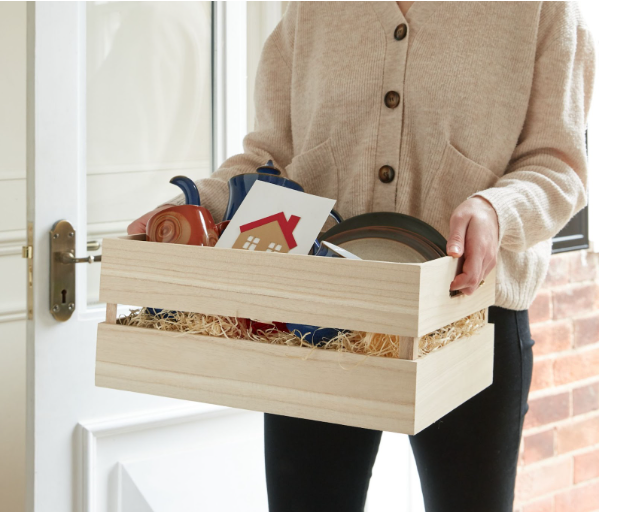
Moving into a new home is an exciting adventure, and, for many of us, it can also prove quite overwhelming. In fact, 83% of individuals reported experiencing stress during the moving process (Forbes). In one study, more than half of respondents rated moving as their most stressful life event, even more so than starting a new job or having a child (Index Digital)!
While it's normal to feel some jitters when moving to your new home, it's important to remember that these feelings are temporary. Picture this: you've taken stock of your belongings and let go of items you no longer need. You've chosen the perfect decor for this fresh start, and the bustle of moving day is behind you. Now, you're unpacked and settled in your beautiful new space. As you sink into your sofa and take in your fresh surroundings, you can finally appreciate how your hard work has paid off. It’s all been worth it.
To help you navigate your relocation smoothly, we’ve created a comprehensive new house checklist and packing guide. This guide outlines all the essential things you need to know to prepare for the big move, including:
- Transferring bills to your new property
- Updating your address
- Organizing a removal service
- Decluttering advice
- Sourcing packing materials
- How to pack glasses
- How to pack wine glasses
- How to pack mugs
- How to pack plates
- A list of kitchen essentials for new homes
Preparing for your move

Preparation is key for a smooth moving day. Here’s what to consider in advance to ensure everything goes well.
Transferring bills to your new property
Make a list of all of your current service providers, including electricity, water, gas, and the internet, as well as your trash collection service if that applies. Contact each provider to request the transfer of your old services to your new property. It’s best to do this well in advance of moving to ensure you won’t be going without during those first few weeks. Having your account and billing details on hand will simplify the process. It’s also worth keeping hold of any final bills from your old address in case you are asked to provide them.
Alternatively, you might want to switch companies for some of your services. It’s always worth doing some research to find out if you could be saving money elsewhere, so shop around a little to find the best deals for you.
Updating your address
Updating your address can be a gradual process. Start by informing your healthcare providers of your new address as soon as possible, and remember to update the billing addresses for any credit cards and subscriptions you have. Additionally, you may want to re-register to vote in your new area. You can change your voter registration details at the government portal.
Other places that should be notified of your change of address include the post office, your insurance providers, your driver's license and vehicle registration, your bank, any mail-order subscriptions, and any clubs you belong to.
Make sure to inform friends, family, and your employer of your new address. If you’re comfortable with it, consider leaving a forwarding address with your former landlord or the new occupants of your old home. This way, they can pass on any mail that arrives in the first few weeks after your move.
Make a parking plan
Do you or a member of your household own a vehicle? If your new home includes a private driveway, garage, or parking space, congratulations — you have one less detail to manage. If not, make sure to find out how to apply for a parking permit in advance. Additionally, it’s a good idea to have a parking plan for the first few weeks to avoid costs and the hassle of moving your car frequently.
Taking time off work
While not always possible, aim to schedule your moving date for a quiet week or a weekend. You might be glad for a couple of days off work on either side of the move, too, so book any time off in advance if you are able to.
Organizing a removal service
According to Forbes, over a third of people who opted not to utilize removal services regretted the decision. If you have large items such as furniture, are moving a long distance, or won't have access to your own vehicle, it's wise to consider hiring a removal service to reduce stress on moving day. You may want to use price comparison websites to compare quotes and find the best deal.
Pets
If you’re finding the moving process stressful, imagine how your furry friend is feeling! Pets notoriously aren’t big fans of the unfamiliar, so it’s a good idea to have a plan in place for the coming weeks. Make sure your pet is comfortable in their carrier ready for the journey to your new home, especially if it’ll be a long one. With regards to packing up, you might want to leave one room for last so that your pet has a familiar space to relax amid the chaos.
Once you arrive, ease your pet gradually into the new place, and don’t forget to make sure it's pet-proof, too, just like your old home.
Visit the ASPCA for everything you could want to know about moving house with your beloved animal.
The big pack
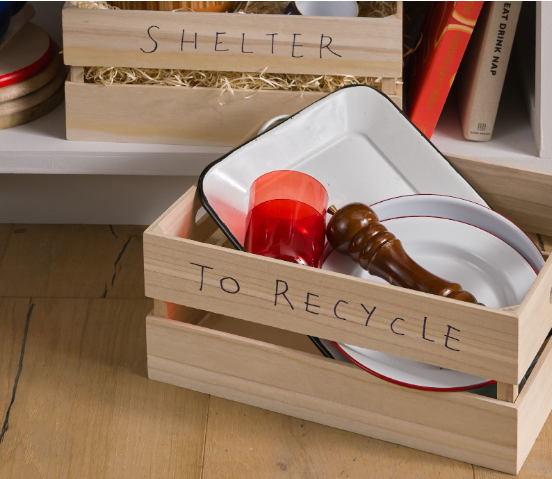
Now for the more time-consuming part — the pack up. Packing for a move can be daunting, but being methodical and strategic can make the process much easier. Here’s our new house checklist for packing up your belongings:
Decluttering advice
Fewer items mean fewer boxes, as well as less time, energy and money spent transporting your every possession to the new home. While it's important to keep the things that hold value, now is a good time to target any clutter that has accumulated over the years and decide what to let go of. Here are some tips to help streamline the decluttering process:
- Start early: It’s easy to underestimate just how many possessions we own, especially when we store things in attics or storage closets. Out of sight, out of mind, right? Beginning the decluttering process well in advance will help reduce last-minute stress and rushing to meet your moving deadline.
- Be methodical: Go through each room, evaluating which items you truly need, love, or hold sentimental value. It’s a good idea to sort items into categories (i.e., keep, donate and discard).
- Be practical: Think about the size of your new space. Will all of your belongings fit there comfortably? Do you own any duplicates? If something hasn’t been used in the last year or two, consider letting it go
- Involve others: If you’re struggling to part with things, it can be helpful to gain some perspective from a friend or family member.
- Document everything: Ever opened your suitcase on vacation and not been able to find something you swear you packed? It’s smart to keep an inventory of everything you’re taking with you to help with unpacking and organization later.
- Don’t forget to be sustainable. Wherever possible, donate and recycle what’s no longer needed instead of throwing it in the trash. You can list unwanted clothing, electronics, and homeware items on secondhand sites such as eBay and Poshmark.
Sourcing packing materials
Plenty of sturdy packing boxes are the best way to safely pack up your belongings. If you have any saved from previous orders (a recent Denby order, perhaps!) those can be useful. If not, you can often ask local grocery stores for spare boxes or purchase them from removal companies or storage facilities. It's important that any boxes you use are durable. Reinforce them with strong packing tape to minimize the risk of breakage.
Next, you’ll need packing materials to protect your fragile items. Any glassware, ceramic tableware, ornaments, mirrors, picture frames, and electronics should all be wrapped up securely to prevent damage. Consider padding out any furniture items that could be vulnerable to scratching.
We’d advise avoiding plastic packing materials where possible, as they often end up in landfills. Shredded paper and cardboard are good sustainable options, or, you can purchase biodegradable alternatives to bubble wrap and packing peanuts. Architectural Digest has written a guide to making your move eco-friendly.
How to pack glasses for moving
According to the Forbes survey, 46% of people listed ceramics and glassware among their most stressful items to move, but with the right technique, packing glasses for moving doesn’t have to be a risky process. Here’s the best way to pack your glassware safely to avoid cracks and chips:
- Choose the right boxes: A box that’s too big can become heavy when filled with glassware. Equally, there’s a lot of potential for your pieces to rattle around in an oversized box. Select a medium-sized box, preferably with dividers inside to separate glasses and prevent them from clinking together and chipping.
- Prep your box: Line the packing box with tissue paper, newspaper, shredded card or anything else that’ll work to cushion the bottom of the glasses, protecting them from knocks.
- Wrap individual glasses: Wrap the largest and heaviest pieces first — these will sit at the bottom of your box, with lighter pieces on top. Wrap them in your packing material ensuring they are completely covered. Take extra care with fragile handles or decorative bits. You can use paper or towels as wrapping.
- Wrap stackable glasses: Stackable glasses can be wrapped together by placing a sheet of packing paper inside the first one, then nesting the next inside of it and so on. Tuck the ends of your packing paper securely inside your top glass so it won’t unravel.
- Layer: Starting at the bottom of the box, pack your items from heaviest to lightest. A little packing material between layers will prevent them from rattling around. Place more packing material on top for cushioning — a thick layer is wise.
- Reinforce the box: Seal your packing box well with packing tape on the top and bottom. Label the box as fragile and with an arrow to show which way up it should be carried, so that you and the movers know what’s inside.
How to pack wine glasses
Wine glasses are especially vulnerable to damage due to their shape. To pack them efficiently, select the right box and packing materials as you did with your other glassware.
It’s best to wrap wine glasses horizontally, rolling them in the packing material like a burrito. Up to five layers of padding may be needed to protect them properly. Ensure the glass is wrapped snugly, but not so tight as to exert pressure on the stem, as this can cause damage.
Place wine glasses at the top of packing boxes, leaving plenty of room around them for cushioning. Before sealing, shake the box gently to ensure the glasses aren’t sliding around.
How to pack mugs for moving
Mugs are one thing we tend to accumulate over the years, so now is a good time to access your current mug collection to decide which you might want to part with.
When it comes to packing technique, it’s very similar to your glassware — divide pieces by size and weight, choose your packing materials and a sturdy, medium-sized box to line. Mugs are not usually stackable, so wrap each one individually. Fill any empty space in the box with cushioning material to prevent jostling.
How to pack plates for moving
Tableware can be on the weightier side, so you may want to select a larger box to accommodate this.
It’s recommended to pack plates on their side rather than laid out flat on top of one another — this allows plates to absorb shock better should they get knocked. You’ll still want to place a sheet of packing material between each plate, and fill in any gaps in the box so they don’t move around.
Packing your Denby
Our homeware is made to last, designed to travel with you through the moving process and beyond. However, even the most durable items can be scratched, so please take care when stacking and packing your Denby collection. For full details on how to care for your Denby properly, visit our product care page.
A note on newspaper
Newspaper can be a handy wrapping resource, but there’s a chance the ink might rub off onto your tableware and stain it. Depending on the color and type of dishes you own, that might not be such a big problem. If you’re worried, use plain paper or tissue paper to protect those plates.
A new start: our list of kitchen essentials for new homes
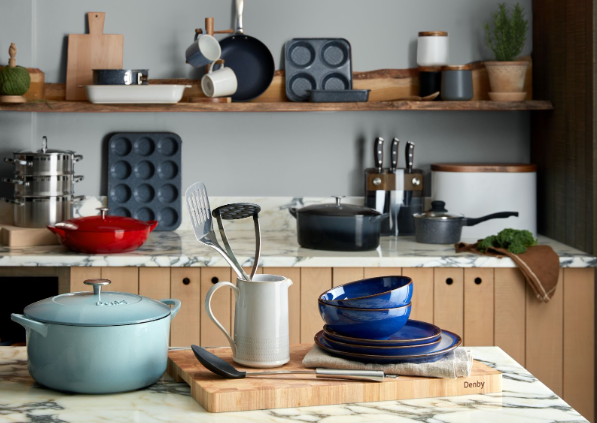
So, you’ve helped give new life to older items by donating or recycling them, and, with any luck, everything you have chosen to bring along has survived the journey unscathed. As you embark on your new home journey, you may want to refresh your current homeware collection to put your own stamp on your new interior.
If you’re anything like us, the kitchen will be one of the first rooms you prioritize getting set up — you’ll no doubt be looking forward to hosting loved ones in your new place, or getting to know your new neighbours over lunch or a glass of wine! Read on for some tips for kitting out your new kitchen.
Tableware
Your unique mealtime rituals will determine what ‘essential’ means for you. Think about the pieces you use every day or every mealtime. Your table essentials might look like a set of dinner plates, along with some smaller plates for salads and snacks, some pasta bowls, soup bowls, a set of glasses, as well as ceramic drinkware for hot drinks.
Now think about the pieces that are slightly more occasional. Gin glasses for Friday nights with friends, for example, or that coffee mug you save for Sunday morning lie-ins.
When purchasing tableware, you might have a specific style or color scheme in mind to fit seamlessly with your new decor. For example, you might opt for a dinnerware set for a cohesive feel. Alternatively, you might prefer the mix and match approach. Laying the table is a timeless art, and however you choose to style your spread is completely up to you!
Browse our tableware buying guide for more tips.
Serveware
You might love hosting dinner parties with plenty of guests, or maybe you only invite people into your kitchen sanctuary every once in a while. Regardless, you might want to have serving bowls and serving platters in your arsenal for when you do entertain. No need to reserve them for guests, either — serving vessels are a convenient go-between from oven to plate, and will still enhance the eating experience if you’re dining alone.
Cookware
Speaking of oven to plate: No matter your level of skill in the kitchen, our range of cookware and oven dishes are ideal for cooking up favourite meals, including pies, traybakes, stews and roasts, and they double up as stylish serving platters. Dutch ovens come with a fitted lid to seal in moisture to your creations for mouth-watering feasts.
The finishing touches
It’s the little details that really make a house a home. Our home decor collection is made in England from Derbyshire clay, crafted by hand to inject a little soul and heritage into your space.
Gifts for a new home
Housewarming gifts beginning to roll in? Lucky you! While there’s always room for another pot plant, you might wish to ask loved ones for some kitchenware for your new home, particularly if you’ve got a birthday or holiday coming up. Browse our curated selection of housewarming gifts for some inspiration.
So, now that you're equipped with your new house checklist and list of kitchen essentials for new homes, moving day should feel like a breeze. Whether you’re a first-time buyer or moving into your forever home, your Denby is designed to be with you for life. Our homeware collections are created durable enough to last, with classic, timeless designs that will continue to look their best for years to come, wherever you might end up calling home.
If you’re ready to explore, head over to our inspiration hub for buying guides, styling help, and all things home. Maybe you’re hunting for ideas for your housewarming party feast? Let our recipes page act as a springboard for your creativity.